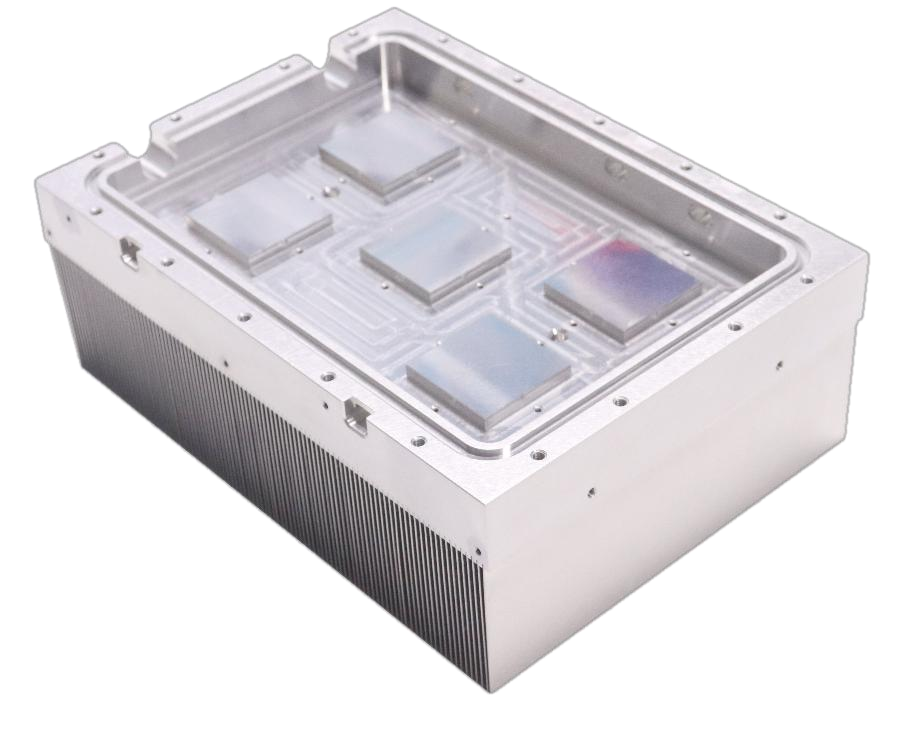
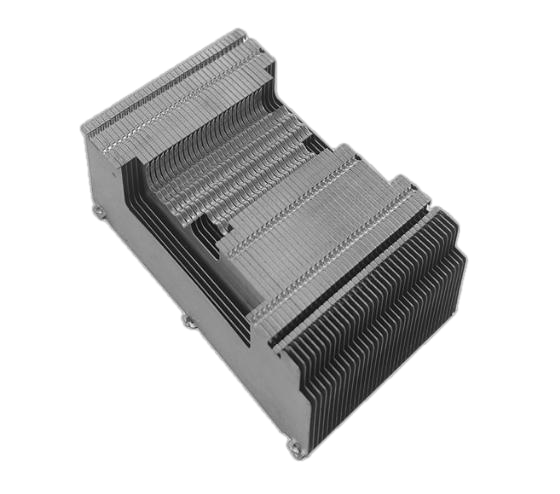
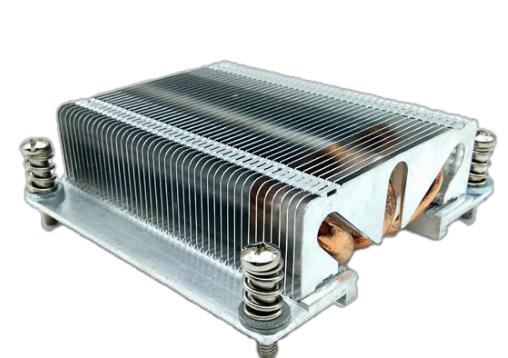
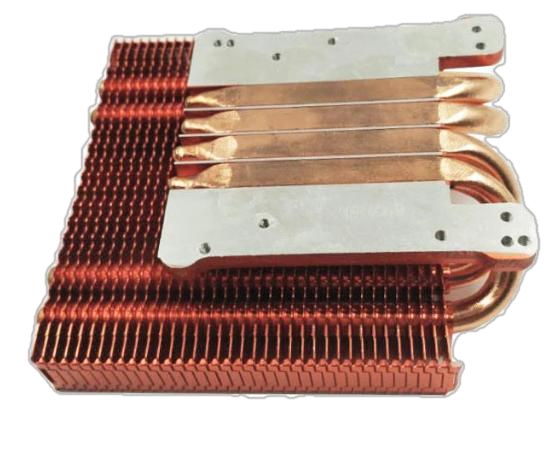
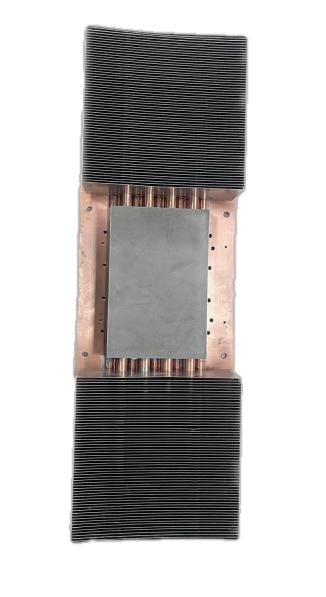
醫(yī)療(風(fēng)冷有鏟齒熱管焊接散熱器)Medical (air-cooled heat pipes with finned radiators)
設(shè)備的功率越大意味著其發(fā)熱量越大,并且從總體來講,還要在越來越小的空間里進(jìn)行散熱(因?yàn)樵O(shè)備的體積變得越來越小)。隨著我們對(duì)醫(yī)療設(shè)備精確度和可靠性的要求越來越高,散熱控制變得更加重要。在此我們認(rèn)為水冷散熱將會(huì)是一個(gè)主流趨勢(shì),精確的核心散熱冷頭,占用的面積更小。水冷能從遠(yuǎn)端控制散熱,從而噪聲降低,散熱性能也提升了。
The higher the power output of a device, the greater the amount of heat it generates; moreover, in general, thermal management must be achieved within increasingly confined spaces (as devices become smaller in size).
As our demands for precision and reliability in medical equipment continue to rise, thermal management has become increasingly critical.
We believe that liquid cooling will emerge as a dominant trend, with precision core cooling heads occupying a smaller footprint. Liquid cooling enables remote thermal management, thereby reducing noise levels whilst enhancing cooling performance.